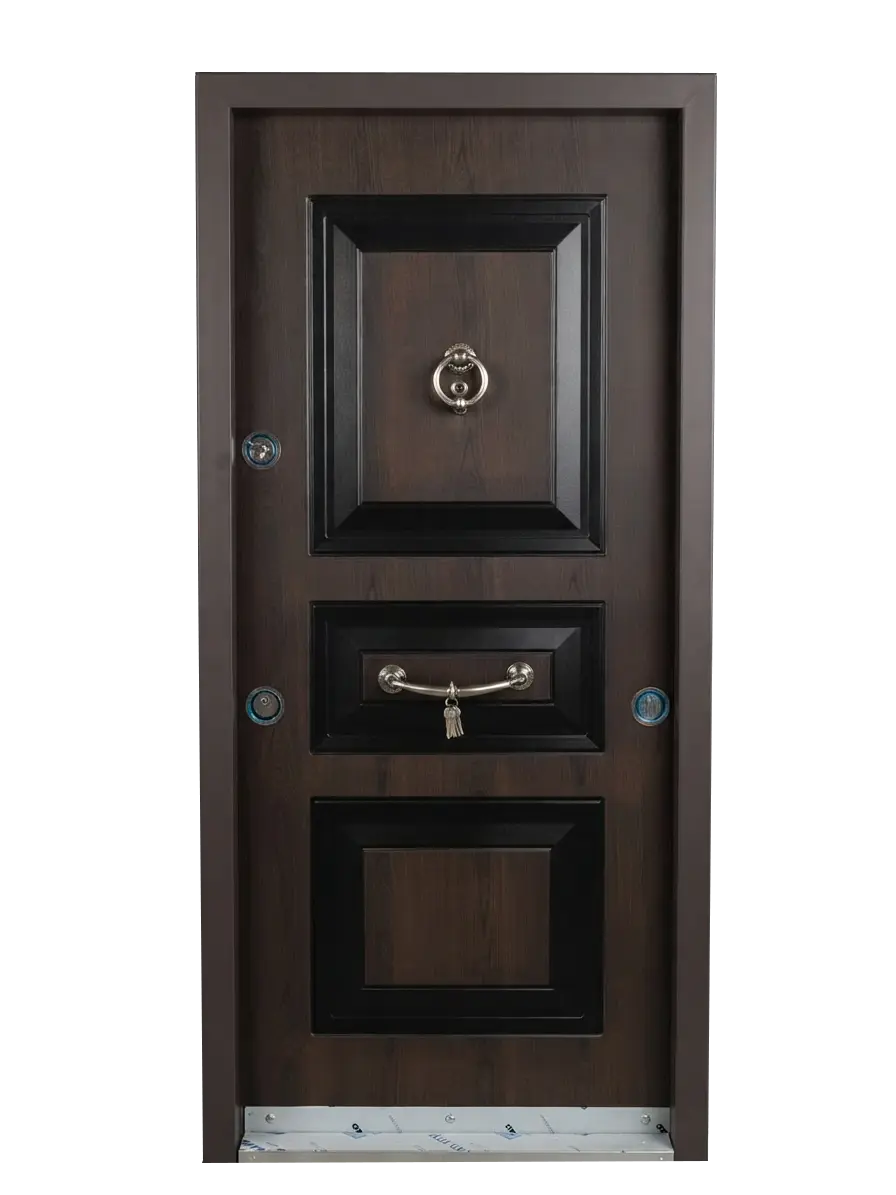
What Is an American Panel?
The term "American panel" (Amerikan kapı paneli in Turkish) refers to an MDF door panel produced by the vacuum membrane pressing process, where a flexible PVC film is heat-formed over a pre-routed or profiled MDF core. The vacuum process pulls the film tightly into grooves, recesses and raised areas — creating a three-dimensional decorative surface that mimics classical carved or moulded door styles.
The 3D profile is what defines an American panel. Common profiles include: central raised field with surrounding frame moulding, arched tops, double-panel layouts and decorative groove patterns. The PVC film then provides the colour and texture — typically wood grain, solid colour or aged/antique finishes.
| Core material | E1 MDF, pre-routed/profiled |
|---|---|
| Surface | PVC film (vacuum membrane) |
| Profile | 3D raised/recessed decorative |
| Typical thickness | 18–40 mm (door slab) |
| Film thickness | 0.2–0.4 mm PVC |
| Moisture resistance | Good (sealed PVC surface) |
What Is Melamine MDF?
Melamine MDF is produced by thermofusing a decorative paper — pre-impregnated with melamine resin — directly onto the flat surface of an MDF panel under heat and pressure. The result is a smooth, uniform, flat surface. There is no three-dimensional profile: what you see is purely the print of the decorative paper.
Melamine panels are the most cost-efficient option for interior doors where a flat, contemporary aesthetic is acceptable. They are widely used in residential, office and retail fit-out projects where volume and price are the primary drivers rather than decorative profile complexity.
American Panel vs Melamine: Side-by-Side
| Criterion | American Panel (PVC) | Melamine MDF |
|---|---|---|
| Surface type | 3D profile — raised/recessed decorative | Flat — uniform smooth surface |
| Production method | Vacuum membrane PVC pressing | Thermofusion paper bonding |
| Aesthetic style | Classical, ornate, carved look | Contemporary, minimalist, flat |
| Moisture resistance | Good (sealed PVC) | Moderate (paper surface) |
| Scratch resistance | Moderate (PVC film) | Moderate (melamine resin) |
| Colour/design range | 50+ PVC films (grain, solid, aged) | Wide — limited by paper print |
| Price (per unit) | 15–30% higher than melamine | Lower baseline cost |
| Market preference | Middle East, North Africa, Balkans | Residential Europe, budget market |
| Edge treatment | PVC wrapping or ABS edge banding | ABS/PVC edge banding |
| Formaldehyde class | E1 | E1 |
Aesthetic Difference: The Most Important Factor
For most wholesale buyers, the decision between American panel and melamine is primarily aesthetic — not technical. They serve different interior design styles:
American Panel → Classical Interiors
The 3D profile of an American panel creates shadow lines and depth — giving the door a hand-carved, furniture-grade appearance. This is the preferred style in Egyptian, Iraqi, Libyan and Gulf interior door markets where ornate, classical aesthetics dominate residential and hospitality projects.
Melamine → Contemporary Interiors
Flat melamine panels suit modern, minimalist interior design. Without profile relief, the door surface is clean and seamless — matching contemporary European design language. Common in Scandinavian-influenced offices, retail interiors and modern residential apartments.
Market Reality
Many importers stock both. American panel typically commands higher retail margin in markets where classical styles dominate (MENA region). Melamine serves volume residential orders where price per unit is the primary procurement criterion.
Why Production Method Matters for Buyers
Understanding the production process helps buyers evaluate quality claims and compare supplier quotes accurately:
Vacuum Membrane Press Quality
For American panel, the quality of the vacuum membrane press and the temperature/pressure control determines how cleanly the PVC film wraps into deep profile grooves without wrinkles or voids. Lower-quality presses produce visible bridging or air pockets at sharp corners. CİHANPAN's production line uses controlled-temperature vacuum membrane equipment with tight quality inspection.
PVC Film Grade
The PVC film quality (thickness, flexibility, UV stability) directly affects the finished look and durability. Thin or brittle films crack at profile edges over time, especially in temperature-cycling climates. CİHANPAN uses 0.3–0.4 mm flexible PVC films with UV stabilisers.
MDF Profile Precision
The CNC-routed MDF core must have precise, consistent profile geometry for the vacuum film to wrap cleanly. Inconsistent routing depth or profile radius creates visible defects in the finished panel. This is where smaller Turkish producers often cut corners.
Which to Choose: American Panel or Melamine?
Choose American Panel when:
- Your market prefers classical or ornate door styles (MENA, Balkans)
- Your buyers want furniture-quality appearance at a mid-market price
- The project spec calls for profiled or moulded door faces
- You need humidity resistance for warm, humid climates
- You want a higher retail margin product in your range
Choose Melamine when:
- Your market prefers flat, contemporary door aesthetics
- Price per unit is the primary competition driver
- The project is large-volume residential with standard interior design
- You need the widest colour consistency across large orders
- The installation environment is climate-controlled (low humidity risk)
CİHANPAN: Both Panel Types, One Factory
CİHANPAN produces both PVC coated (American panel style) and other surface types at its 10,000 m² Kayseri facility. All panels share the same E1 MDF core and export documentation standard:
PVC Coated MDF Panel
Vacuum membrane PVC — American panel style. 50+ film designs, classical and contemporary profiles available.
View product →Laminoks HPL Panel
Class 4 HPL flat surface. Higher durability than standard melamine — preferred for commercial and hotel applications.
View product →UV Lacquered MDF Panel
Premium flat finish. High-gloss or matt. For buyers who want a contemporary panel at the top of the market.
View product →Laser Cut MDF Panel
Decorative profile cut. Can be combined with PVC coating for a unique visual — custom designs available.
View product →All panel types are available with FCL pricing, certificate of origin and E1 test certificates. Mixed-type containers accepted.
Summary
- American panel = vacuum PVC on profiled MDF → 3D classical look, better moisture seal, 15–30% higher price
- Melamine MDF = thermofused paper on flat MDF → contemporary flat look, lower cost, lighter weight
- Market fit: American panel dominates MENA and Balkan markets; melamine suits modern residential and European-influenced markets
- CİHANPAN produces both from the same factory — mixed FCL orders accepted
The right panel is the one your market expects. Stock both and let your buyers decide — CİHANPAN can fill both in a single container.
Frequently Asked Questions
What is an American panel door panel?
An American panel (Amerikan panel) is an MDF door panel where a PVC film is applied using a vacuum membrane press to create a three-dimensional raised or recessed profile design — mimicking classical carved wood door styles. The term is widely used in Turkish, Middle Eastern and North African door manufacturing markets to describe this vacuum-formed profiled PVC panel type.
What is the main difference between American panel and melamine MDF?
The key difference is surface texture and production method. American panels use vacuum membrane pressing to bond PVC film over a profiled (shaped/routed) MDF core, creating a 3D decorative surface. Melamine panels use thermofusion to bond flat decorative paper onto a flat MDF core — producing a smooth, uniform surface without profile relief.
Which is more durable: American panel or melamine?
American panel (PVC coated) is generally more moisture-resistant than standard melamine. The PVC film creates a sealed surface that resists humidity and daily cleaning better than melamine paper. However, CİHANPAN's Laminoks HPL panels outperform both in scratch resistance and long-term durability for commercial applications.
Is American panel more expensive than melamine?
American panel typically costs 15–30% more than comparable flat melamine panels due to the PVC film material cost and the more complex vacuum membrane production process. The exact price difference depends on the profile complexity and PVC film quality.
Does CİHANPAN produce American panel door panels?
CİHANPAN produces PVC coated MDF panels using vacuum membrane pressing — which is the same production process as American panel. Available in 50+ PVC film designs including plain colours, wood grains and textured films. Contact the export team for the full catalogue and FCL pricing.